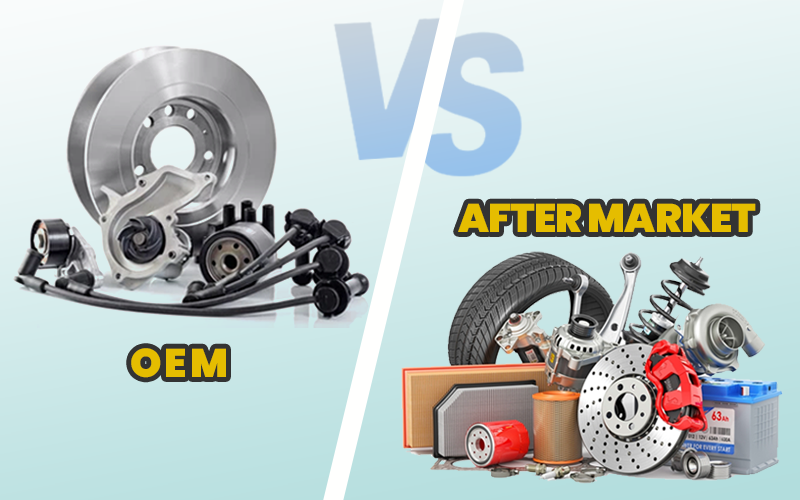
When your vehicle requires service or repair, one of the most critical decisions you will make is selecting the type of replacement components to install. The debate typically centers on two primary categories: Original Equipment Manufacturer (OEM) parts and Aftermarket parts. This choice influences not only the immediate cost of the repair but also the long-term performance, safety, and value of your vehicle.
Making an informed decision requires understanding the fundamental distinctions between these two options. There is no universally ‘correct’ answer; rather, the optimal choice depends on several factors, including the age of your vehicle, your budget, the specific component being replaced, and your priorities regarding warranty and peace of mind.
Defining the Contenders: OEM and Aftermarket
Before diving into the specific pros and cons, it is vital to define exactly what each term means.
OEM Parts Explained
OEM stands for Original Equipment Manufacturer. These parts are made by the same company that manufactured the original components installed in your vehicle when it was new on the assembly line. While a car company like Ford or Toyota designs and assembles the vehicle, they outsource the manufacturing of thousands of individual components (such as spark plugs, brake calipers, or sensors) to specialized suppliers. A spark plug made by Denso for a new Toyota is an OEM part. When you purchase a replacement Denso spark plug from a Toyota dealership, packaged in a Toyota box, you are buying an OEM part.
OEM parts are, by definition, identical to the ones your vehicle came with. They are designed to meet the exact specifications, tolerances, and quality standards set by the automaker.
Aftermarket Parts Explained
Aftermarket parts are manufactured by companies other than the original supplier. Once a vehicle is released, other manufacturers reverse-engineer the components to create replacements. These companies are not affiliated with the automaker and do not hold the original blueprints or design specifications. The goal of aftermarket manufacturers can vary widely. Some aim to create exact replicas, while others may seek to modify the design, improve performance, utilize different materials, or simply offer a lower-cost alternative.
Aftermarket components can range from high-quality, performance-oriented parts to inexpensive, generic alternatives.
Original Equipment Manufacturer (OEM) Parts
For many vehicle owners, particularly those with new or leased cars, OEM parts are the preferred choice. They offer direct replacement and guaranteed compatibility.
Advantages of OEM Parts
-
Guaranteed Compatibility and Fit: Because OEM parts are built to the exact blueprints of the original, there is zero guesswork involved in the installation. The fit will be precise, and the function will be identical. This reduces installation time and eliminates the risk of a component not interfacing correctly with surrounding systems.
-
Consistent Quality: OEM parts must adhere to the rigid quality control standards established by the automaker. This consistency ensures that the performance and longevity of the replacement part match the original, contributing to predictable vehicle behavior.
-
Simplified Selection Process: Choosing an OEM part is straightforward. You locate the correct part number for your year, make, and model, and you know exactly what you are getting. There is no need to compare different brands or weigh varying performance claims.
-
Warranty Coverage: Replacement OEM parts typically come with a warranty that is recognized by any authorized dealership of that manufacturer nationwide. If the part fails prematurely, it can be replaced at no cost, often including labor.
Disadvantages of OEM Parts
-
Higher Cost: The primary drawback of OEM parts is their premium price tag. Automakers and their dealerships mark up these components significantly to cover research and development, distribution, and brand licensing. This markup often makes them sixty percent or more expensive than their aftermarket counterparts.
-
Limited Availability: In general, authentic OEM parts must be purchased through a local dealership’s parts department or a authorized online OEM reseller. They are rarely available at general auto parts stores, which can make obtaining them less convenient or require waiting for shipping.
-
The Status Quo: OEM parts are designed to be the original part. They do not offer performance enhancements or design improvements. If the original design had a known weakness, the OEM replacement will typically replicate that same weakness.
Aftermarket Auto Parts
The aftermarket industry is vast and diverse, offering a multitude of choices for almost every vehicle on the road.
Advantages of Aftermarket Parts
-
Lower Cost: The most compelling reason to choose aftermarket parts is significantly lower pricing. Without the overhead of automakers or brand licensing, aftermarket manufacturers can offer competitive pricing, making vehicle ownership more affordable, especially for major repairs.
-
Greater Selection: For any given replacement component, there may be dozens of different aftermarket brands to choose from. This variety allows consumers to select a product that best aligns with their budget and priorities, whether they are looking for a basic functional replacement or a premium upgrade.
-
Potential for Improved Performance: The aftermarket isn’t just about saving money. Many reputable aftermarket companies specialize in identifying weaknesses in the original OEM designs and offering improved versions. This is common in the performance world, where aftermarket manufacturers offer superior brakes, suspension, or exhaust systems.
-
Convenience and Availability: Aftermarket parts are ubiquitous. They are carried by every major auto parts retailer, most local garages, and hundreds of online vendors, making it easy to find what you need quickly, often on the same day.
Disadvantages of Aftermarket Parts
-
Varying Quality Standards: This is the significant challenge of the aftermarket. While some parts are equal to or better than OEM quality, others are poorly made using inferior materials. Navigating this vast landscape requires research and a degree of brand trust, as quality is not guaranteed.
-
Overwhelming Selection: The immense variety can be a double-edged sword. A simple query for a set of brake pads might return thirty different options, making the selection process confusing for the average consumer.
-
Fitment Issues: Since aftermarket parts are reverse-engineered, they may not possess the exacting tolerances of the original. This can lead to fitment issues, requiring modifications during installation or creating clearance problems, ultimately affecting performance or causing accelerated wear on adjacent parts.
-
Warranty Variations: Aftermarket parts always come with a warranty, but its terms and reliability vary greatly depending on the manufacturer and the retailer. Claims are generally handled through the place of purchase, not a nationwide network, and may not cover labor costs.
Key Factors When Making Your Decision
The choice between OEM and Aftermarket often depends on the specific repair and your circumstances.
-
Vehicle Age and Value: For new vehicles (under three years old) or leased cars, OEM parts are almost universally recommended. They protect the vehicle’s factory warranty and maintain the highest possible resale value. For older vehicles, aftermarket parts become increasingly practical as the cost of OEM components might exceed the vehicle’s depreciated value.
-
The Component Type: For critical systems like engine internals, advanced electronics (like sensors and control modules), or complex drivetrain components, OEM parts are safer. For routine wear items, the decision is more flexible.
-
Examples where OEM is typically preferred: Brakes, complex transmission parts, ignition components, electronic control modules (ECM/PCM).
-
Examples where high-quality Aftermarket is common: Filters (air, oil, cabin), wiper blades, spark plugs (from reputable suppliers like NGK or Denso, which are also often OEM), belts, and hoses.
-
-
Budget and Insurance: If you are paying for the repair out-of-pocket, aftermarket parts offer substantial savings. If the repair is covered by insurance, they may default to aftermarket parts (or LKQ-Like Kind and Quality) to manage costs, although you often have the right to request OEM parts and pay the difference.
-
Risk Tolerance: If your highest priority is minimal risk, simplified selection, and guaranteed compatibility, the OEM premium is often worth paying. If you are comfortable researching brands and accept the possibility of a fitment issue, you can save significant money in the aftermarket.
A Note on CAPA Certification
The Certified Automotive Parts Association (CAPA) is a third-party non-profit organization that tests and certifies aftermarket parts, specifically collision parts like fenders, bumpers, and lighting. A CAPA-certified aftermarket part has been rigorously evaluated to ensure it meets or exceeds OEM specifications for fit, function, and material quality. Opting for CAPA-certified components can bridge the gap, offering aftermarket savings with near-OEM quality assurance.
Frequently Asked Questions
Will using aftermarket parts void my vehicle’s factory warranty?
No, using aftermarket parts will not void your entire vehicle warranty. In the United States, the Magnuson-Moss Warranty Act of 1975 protects consumers by making it illegal for a manufacturer to void a warranty simply because an aftermarket part was used. However, if an aftermarket part is proven to be the direct cause of a failure in a warranted component, the warranty claim for that specific failure can be denied.
Are all aftermarket parts cheaper and lower quality than OEM?
While the majority of aftermarket parts are priced lower, price and quality do not always correlate. There are many premium aftermarket brands that produce performance parts (like racing brakes or high-end suspension) that are significantly more expensive and offer vastly superior performance compared to the original OEM part. Conversely, some inexpensive aftermarket parts are poorly engineered and made from substandard materials. Research and brand reputation are critical.
How do I know if the part is truly an OEM part?
To verify a part is an OEM part, it should come packaged in the official branding of the vehicle manufacturer (e.g., Mopar for Chrysler/Dodge/Jeep, Motorcraft for Ford). It should also have the manufacturer’s official part number and a “Genuine Part” logo. Ordering from an authorized dealership’s parts department is the most secure way to ensure authenticity.
Why do some mechanics prefer to use aftermarket parts?
Mechanics frequently prefer aftermarket parts for two main reasons: cost and availability. General repair shops rarely stock a large inventory of vehicle-specific OEM parts, but they can quickly source aftermarket components from local suppliers, enabling faster vehicle turnaround. Furthermore, using aftermarket parts allows them to offer more competitive pricing on their estimates, which is crucial for retaining customers.
What are LKQ (Like Kind and Quality) parts?
LKQ parts are recycled or used auto parts sourced from salvage vehicles that have been deemed to be of “Like Kind and Quality” to the part being replaced. They are not new aftermarket parts and are certainly not new OEM parts. While they offer significant cost savings, their history and wear condition are often unknown.
Is the selection process easier for OEM or aftermarket parts?
The selection process is substantially easier for OEM parts. With an OEM part, you identify the year, make, and model of your vehicle and find the single correct part number, and that is it. For aftermarket parts, the market is saturated with options from numerous brands, forcing you to compare reviews, price points, and material specifications, which can be an overwhelming task.